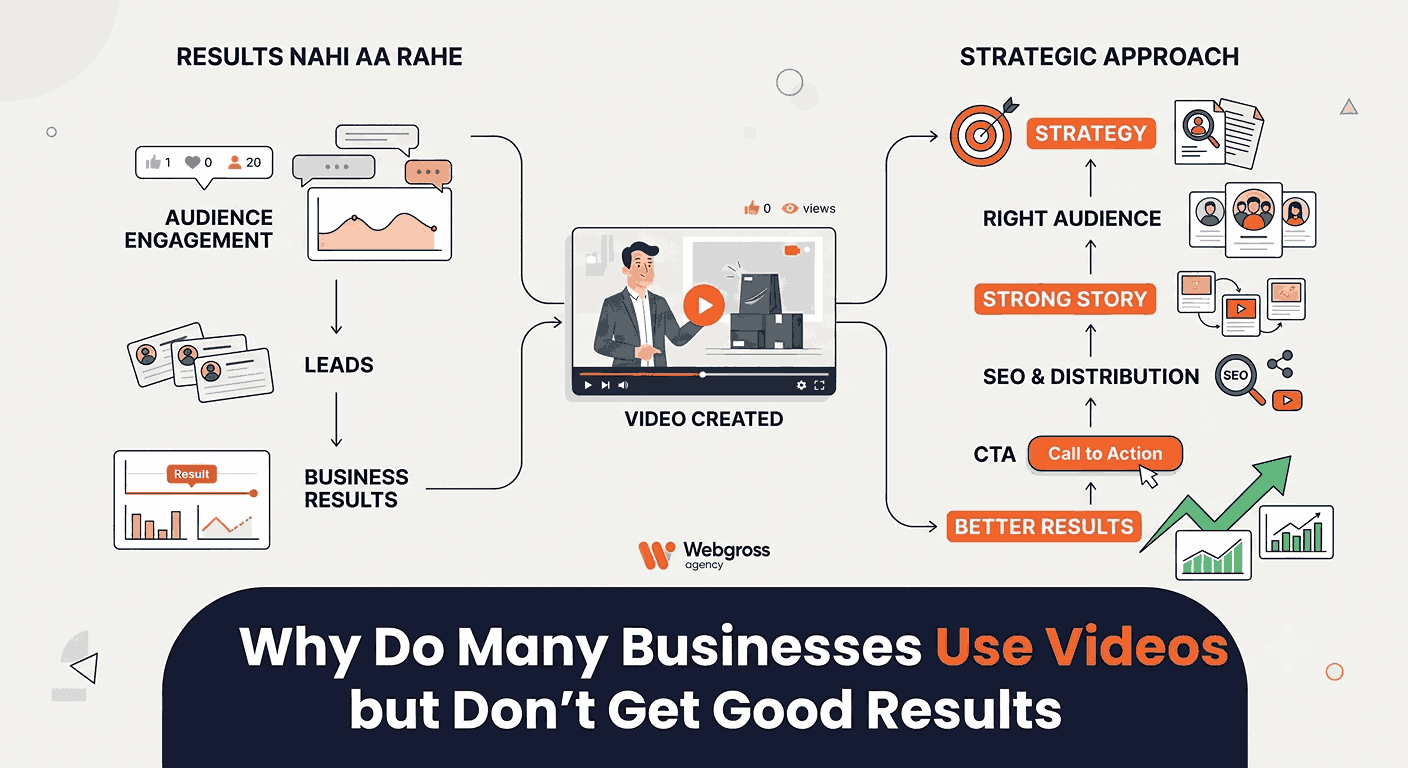
Most companies today are investing in video marketing, but many are not getting the engagement, leads, or sales they expect. Often, the problem isn't that the video doesn’t work but that companies produce videos without a plan, target audience, or professional production. For businesses, a successful video marketing approach is more than just uploading videos to social media. It requires planning, storytelling, optimization, and consistency.
One of the most powerful marketing tools you have at your disposal is video. Whether it is a product demo, customer testimonial, brand story, or educational content, videos help businesses connect with audiences faster than text or images.
But many brands fail to get meaningful results despite spending time and money. It’s not uncommon to struggle with low views, poor engagement, low conversions, and a disappointing ROI. It’s good news that most of these problems can be prevented. By understanding the mistakes businesses make and taking a smarter video marketing approach, companies can dramatically improve their results.
Why is Video Marketing Important
Consumers want to watch videos because they’re engaging, informative, and easy to consume. Videos make complicated ideas easier to understand, build trust, and encourage people to buy.
An effective business video marketing campaign can help companies to:
- Increase brand awareness
- Produce qualified leads
- Increase website engagement
- Build trust with customers
- Increase conversion rates
- Enhance Social media presence
- Enhance search engine visibility.
But it’s not enough to just make videos. Success is all about the right audience with the right content.
3 Reasons Why Your Business Isn’t Getting Results From Video Marketing
1. Not knowing your marketing objective
“Companies are making videos because other companies are making videos. Without goals, success can't be measured.
Before you make any video, ask:
- Looking to raise brand awareness?
- Lead gen?
- Education on the product?
- Keeping customers?
- Conversion on sales?
Every video needs to have a purpose.
2. Not knowing your audience
If the audience's needs aren't met, a beautifully produced video may fall flat. Businesses tend to be about what they want to say rather than what customers want to hear.
Successful videos answer questions such as:
- What problems does your audience face?
- What solutions are they looking for?
- What drives their purchase decisions?
Storytelling that puts people at its heart always wins.
3. Poor Storytelling
Promotional videos often feel more like ads than actual content that’s worth your time. People don’t want to be sold to all the time.
Instead, they respond to stories that teach, entertain, inspire, or solve problems.
Good storytelling is:
- A familiar problem
- A hands-on solution
- Emotional rapport
- Unambiguous message
- Compelling conclusion
This is where professional video production services really shine – blending creative direction with strategic messaging.
4. Poor Production Quality
Poor lighting, shaky camera work, bad sound, and amateur editing all hurt credibility. You don’t always have to spend a lot of money on equipment, but a professional production just looks better to the viewer.
High-quality videos make you look professional and credible.
Professional production consists of:
- Adequate lighting
- Clean Sound
- Cinematic graphics
- Dynamic editing
- Animation & Motion Graphics
- Brand uniformity
The quality directly affects how the audience perceives you.
5. Lack of a Video Marketing Strategy
Usually, random videos don't give consistent results because there is no planning involved.
What makes a good video marketing strategy:
- Target audience
- Video Themes
- Editorial calendar
- Distribution channels
- Performance measures
- Plan for Finances
- Goals of the campaign
“Strategic planning ensures that all videos support business growth.
6. Making Videos Without SEO
Many businesses upload videos without optimizing titles, descriptions, keywords, and thumbnails.
Optimization helps search engines and video platforms understand your content.
Best practices are:
- Titles with keywords
- Detailed descriptions
- Appropriate tags
- Personalized thumbnails
- Captions (Closed)
- Correct file names
SEO improves discoverability on search engines and video platforms.
7. Overlooking Video Distribution
If no one watches the videos, no matter how good they are, they won't work. Businesses will upload a video once and expect results.
Rather, videos should be disseminated across several platforms:
- Company’s website
- YouTube
- X
- E-mail Marketing
- Landing pages
Repurposing a video into multiple formats maximizes your reach.
8. Lack of Strong Call-to-Action
Many videos don't tell viewers what to do next.
Each marketing video has to ask for a specific action, such as:
- Go to the website
- Book a consultation
- Download the guide
- Follow
- Get in touch with the sales team
- Request a quote
People often walk away without converting without a CTA.
9. Irregular Publishing
A couple of videos won’t change your marketing performance. Successful brands publish with consistency.
It helps to be consistent:
- Build trust with your audience
- Refine platform algorithms
- Increase subscriber growth.
- Build brand awareness
Long-term video content marketing strategies are better than occasional uploads.
10. Failing to Measure Performance
So many businesses never analyze video performance.
Key metrics:
- Watching time
- Audience retention
- CTR (click-through rate)
- Interactive
- Generated leads
- Conversion Rate
- Return on investment
Data helps to make better videos in the future and to get the most out of marketing budgets.
What Makes Business Video Marketing Work?
A good business video marketer blends creativity and strategy.
The best performing videos tend to be:
- Help solve customer problems
- Deliver value quickly
- Keep viewers interested
- Use professional imagery
- Finish with a clear CTA
- Contribute to the achievement of overall marketing objectives
Successful businesses don’t make videos for everyone; they make videos for their ideal customer.
Types of Videos That Deliver Better Results
Different marketing goals require different video formats. Popular business videos are:
Brand Story Videos
This type of video introduces the company, its mission, values, and unique selling points while building emotional connections.
Product Demonstration Videos
These videos show the products in action, explain the features, and answer some common customer questions.
Customer Testimonial Videos
This type of customer experience builds trust and increases purchase confidence.
Explainer Videos
These videos simplify complex services or products by using engaging visuals and animations.
Educational Videos
Educational content positions the businesses as industry experts while attracting organic traffic.
Social Media Short Videos
Short-form videos generate high engagement and increase brand visibility across platforms.
How Professional Video Production Services Help
The professional video production services offer far more than just camera equipment.
An experienced production team helps businesses to:
- Develop creative concepts
- Write compelling scripts
- Plan efficient shoots
- Capture high-quality footage
- Edit professionally
- Add graphics and animations
- Optimize videos for different platforms
This ensures that every video supports broader marketing objectives instead of becoming standalone content.
Building an Effective Video Content Marketing Plan
An effective video content marketing plan mainly follows these steps:
Research the Audience
To understand the customer pain points, buying behavior, and preferred platforms.
Set Clear Goals
Define measurable objectives like leads, website traffic, or sales.
Create a Content Calendar
Plan regular publishing schedules with a mix of educational, promotional, and engagement-focused videos.
Focus on Value
Prioritize solving customers' problems rather than constantly promoting products.
Optimize Every Video
Use relevant keywords, engaging thumbnails, captions, and strong descriptions.
Promote Across Channels
You should share videos through websites, social media, email campaigns, blogs, and paid advertising.
Analyze and Improve
Use the analytics to identify what works and continuously polish future campaigns.
Also read the related article:
How Long Does Corporate Video Shooting Take?
Professional Video Editing Services in Delhi: Create Videos That Drive Business Growth
60-Second Video Script: How Many Words Do You Need for a 1-Minute Video?
Conclusion
Businesses do not fail because video marketing does not work; they fail because they treat videos as isolated content rather than as part of a larger marketing strategy. Effective video marketing for businesses requires careful planning, audience research, compelling storytelling, consistent publishing, and performance analysis. By investing in a well-defined video marketing strategy, creating valuable video content marketing, and partnering with professional video production services, businesses can turn videos into powerful tools for brand awareness, lead generation, customer engagement, and long-term growth. When executed correctly, business video marketing can become one of the highest-performing digital marketing investments available.


