Digital advertising has changed significantly over the past decade. Audiences have become more selective, and the polished brand advertisement that once commanded attention now struggles to hold it. What is cutting through the noise is something far less produced: content that looks and sounds like it came from a real person.
This is precisely why UGC video ads have transformed from a niche tactic to a mainstream strategy for brands in all major sectors. They work not because they are visually impressive but because they feel genuine in an environment where audiences are increasingly suspicious of anything that looks too corporate.
What Are UGC Video Ads?
UGC video ads are short-form video ads that use content from real customers, ordinary users, or commissioned creators who create content in the style of organic user posts. These ads look like something your friend shot on their phone and posted; it's not a scripted brand message done by professional actors.
Brands then leverage the content in paid advertising campaigns on platforms like Meta, Instagram, YouTube, and Pinterest. It is not just the format that makes it work but the psychology. Traditional advertising has been trained to be recognized and ignored by consumers . UGC video ads break the mold by looking like the content audiences already consume voluntarily.
How Authenticity Produces Better Outcomes
Authenticity in advertising is not a trend. This is because consumers are making real changes in how they decide what to buy. Most people want to see proof that a product works in the real world before they buy rather than in a controlled brand environment. They want to see how it fits into a real person’s routine and what it actually feels like to use.
Exactly what UGC video ads are delivering. A creator filming themselves using a skincare product in their bathroom is more impactful than a model applying the same product under studio lighting. The setting, the delivery, and the unscripted nature of it all tell the viewer they are watching a real experience, not a manufactured one.
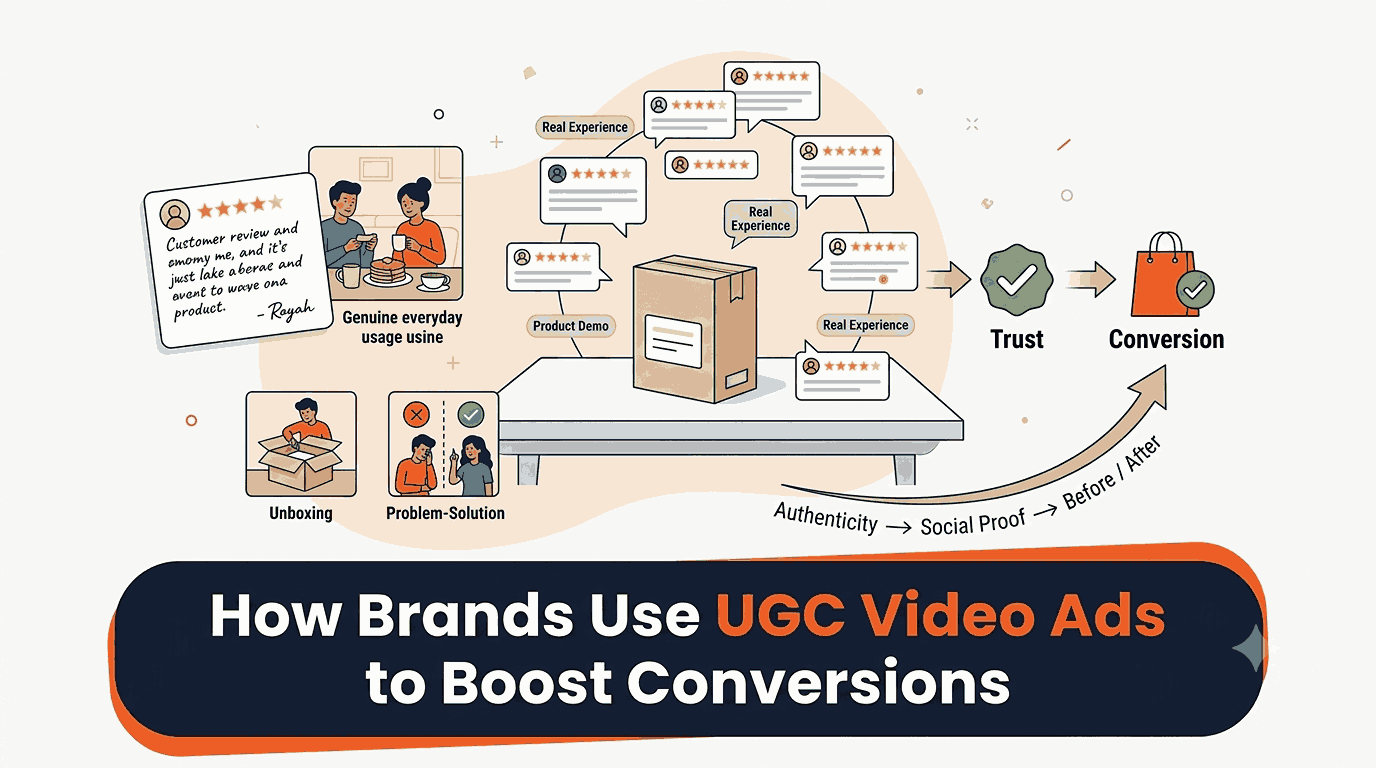
Trust has a direct impact on purchase, and authenticity has a direct impact on trust. When a viewer believes that the person in the video has used and benefited from a product, the gap between interest and action narrows significantly.
Also read the related article: What is UGC Marketing? The Complete Guide to User Generated Content
Social Proof: A Conversion Booster
Social proof is one of the most potent tools in consumer psychology. When people see someone like them making a decision, it reduces the risk of making the same decision themselves. That’s how UGC video ads work.
A testimonial video, a real customer’s unboxing video, or a before-and-after transformation are all proof that a product delivers on its promise. This kind of evidence is far more convincing than a company simply repeating the same thing in a scripted ad. This social proof, when used in paid campaigns, actively helps improve the video ads conversion rate by providing undecided buyers the confirmation they need to move forward.
UGC Video Formats That Work Well
- Testimonials and Reviews: There’s nothing better than a real customer talking about what happened after they bought something. No script. No studio lighting. Just an honest account that viewers can actually believe.
- Product Demonstrations: People do not buy products in a vacuum. They want to see how something fits into a real kitchen, a real gym, a real desk setup. Filming in genuine environments answers that question before the viewer even thinks to ask it.
- Unboxing Videos: There is something genuinely compelling about watching someone open a package they have been waiting for. E-commerce brands use this format well because the excitement of the unboxing moment sells the product before the person has even started using it.
- Before-and-After Videos: If a product delivers a visible result, show it. Words can be ignored. A clear visual transformation is much harder to dismiss, and it handles buyer scepticism more effectively than any written claim could.
- Problem-Solution Videos: Start with a problem the viewer recognises from their own life, then show the product fixing it. Simple structure, strong results. These work in paid UGC video ads because they follow the same thought process a buyer is already going through on their own.
UGC Ad Examples That Illustrate These Formats
Looking at real UGC ad examples helps to show how these formats play out in paid campaigns.
A skincare brand might hire a creator to film a sixty-second morning routine video, organically featuring the product and honestly discussing skin improvements over a few weeks. This is better than a scripted ad when you run it as a paid ad, because it feels like a recommendation, not a pitch.
A fitness equipment brand may incorporate a customer testimonial shot in a home setting, where someone shares how a product kept them consistent during a busy time. The domestic setting and conversational tone lend the content a sense of accessibility and believability.
A food brand can shoot a short unboxing and taste testing video, where a real person reacts authentically to the first time trying a product. What makes these UGC ad examples effective in paid advertising is that they have a common thread, they are focused on consumer experience and not the brand narrative.
Also read the related article: How a UGC Video Production House in Delhi NCR Builds Brand Trust
How to Improve Conversion Rates with UGC Video Ads
There are a number of specific elements that relate UGC video ads to video ad conversion rates.
Firstly, these ads make the buying process easier by pre-empting common questions. Seeing a real person solve the same problem the viewer has, with the same product that is being advertised, removes doubt in a way that a brand cannot copy.
Secondly, the hook has a better chance of working. Instead of a branded intro sequence, an attention-grabbing UGC video kicks off with a relatable situation. On platforms such as Youtube and Instagram Reels, users are scrolling fast, and the first two seconds determine whether an ad is watched or skipped.
Third, the call to action feels more natural. When someone who feels like a peer recommends trying something, it’s more powerful than a brand telling the viewer to shop now. All these factors combined result in a dramatic increase in conversion rate for video ads, especially for brands that run direct response campaigns.
Measuring UGC Video Ad Performance
Running UGC video ads without tracking what they actually do is a waste of good creative. These are the metrics worth paying attention to:
- Click-through rate: If this is low, the hook is probably not working, or the content is not matching the audience. It is the first signal that something needs fixing.
- Conversion rate: It is not the clicks that matter; it is where they go. This metric tells you whether the ad is actually driving purchases, sign-ups, or enquiries, which is the whole point.
- Cost per acquisition: What does it cost to bring in one customer? As UGC video ads get refined and better targeted, this number should come down over time.
- Return on ad spend: For e-commerce brands especially, this is the number that tells the real story. Revenue generated versus money spent, straightforward and impossible to argue with.
- Engagement metrics: Watch time, shares, saves, and comments reveal how the content is landing with real people. Strong engagement usually means lower ad costs too.
Common Mistakes to Avoid
- Overproducing the content: The moment a UGC video starts looking like a brand advertisement, it stops performing like UGC. Heavy editing, branded intros, and polished graphics work against you here.
- Weak or missing calls to action: Authentic content without a clear next step is just content. Every UGC video ad needs to tell the viewer exactly what to do after watching.
- Ignoring the hook: On YouTube and Reels, two seconds is all you get. If the opening does not immediately give someone a reason to keep watching, they will not.
- Running the same creative for too long: Audiences tune out faster than most brands expect. A never-ending fresh rotation of content keeps performance from quietly slipping away unobserved.
Also read the related article:
Why UGC Video Services in Gurugram Are Essential for Modern Brands
How to Choose a UGC Video Agency in Noida for Your Brand
Conclusion
UGC video ads have earned their place in modern brand marketing not because they are the easiest option but because they genuinely work. They connect with audiences at a human level, provide the social proof that purchasing decisions increasingly depend on, and deliver commercial results that more polished formats often cannot match.
The effectiveness of UGC video ads comes from a combination of authenticity, relatability, and clear marketing intent. When those three elements come together, the result is content that does not feel like advertising, which is precisely why it improves the video ads conversion rate so consistently. For brands that have not yet invested seriously in this format, the evidence in favour of doing so continues to grow.


